
- Most disadvantageous neighborhoods in Chicago.
- Chicago Parent Child Center (comprehensive educational support)
- 1967 – families in high poverty neighborhoods
- Second oldest federally founded program in USA (first one is Head-Start)
- Title 1 since 1977 – the primary-grade portion of the program (expansion program) has been funded by …..
- The Chicago Public Schools operate 24 CPCs;
- 20 have services from preschool to third grade
- 4 have services only in preschool to first and second grades.
Major Rationale of the Program;
Enhancing scholastic success by providing a school-stable learning environment during the preschool and primary grade years in which parents are active participants in their children’s education.
Who is eligible for the program ?
- Children who reside in school neighborhoods recieveing Title 1 funds are eligible for program.
- Title 1 funds are given to schools serving high percentages of low-income families.
- As with most early interventions, children must demonstrate educational need and parents must agree to participate in the program.
Outreach Activities of the Center ( to reach and enroll children most in need)
- distributing program descriptions in the community
- visiting families door – to- door
- advertaising logically.
CPCs are located most disadvantaged neighborhoods in Chicago.
- average 66% of the families in these school communities were poor in 1992.
- The average neighborhood poverty rate for the Chicaho Public schools was 42%.
Comparison of the Chicago Study (CPCs) and Head-Start
SIMILARITIES
Like the Head -Start program, the CPCs provide comprehensive services, require parent participation, and implement child-centered approaches to social and cognitive development for economically disadvantaged children.
DIFFERENCES
3 distinquishing features of Child Parent Centers …….
| Chicago Child-Parent Centers | Head-Start |
| 1) CPCs are administrative centers haused in seperate buildings or in wings of their parent elementary schools. | 1) Head- Start programs contact with social services or community agencies. |
| 2) Eligibility; for CPCs elegibility is primarily based on neighborhood poverty. | 2) Eligibility for Head-Start; it is primarily based on familiy -level poverty. |
| 3) Most important difference is; CPCs provide up to 6 years of intervention services from ages 3 to 9. | 3) Head- Start is primarily a preschool program. |
| Those programs provide school- stable environment during preschool and the primary-grade years. |
CPCs Program Components

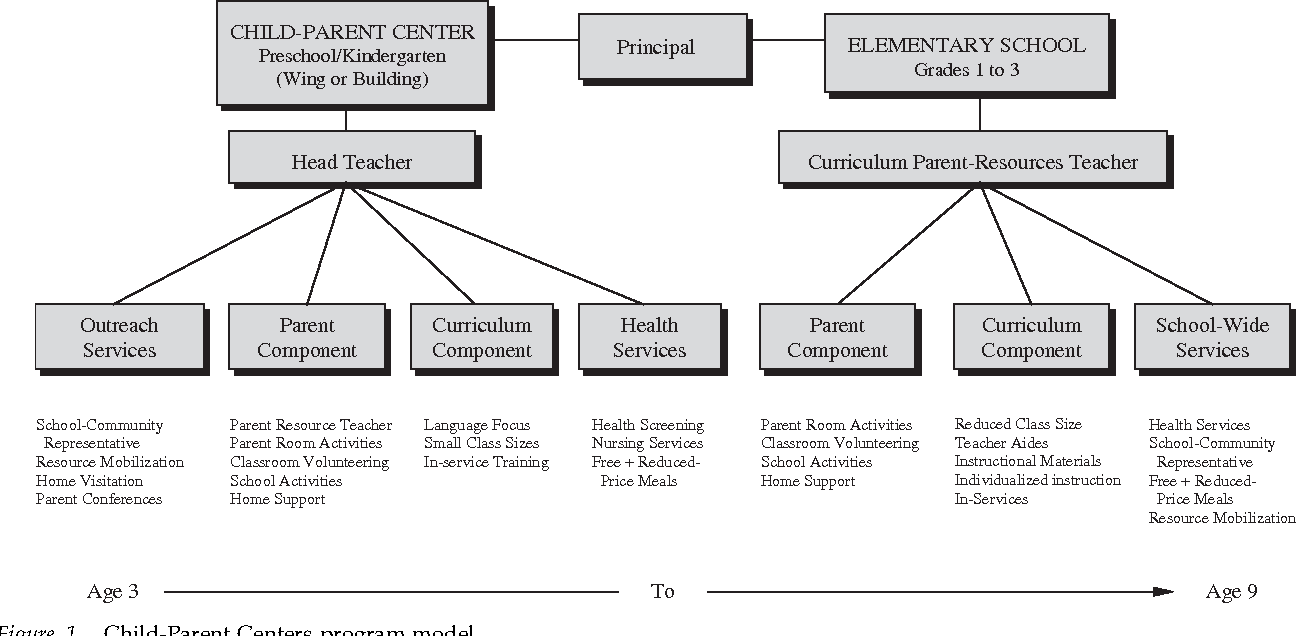
Head Teacher:
She is the program coordinator with overall responsibility for orginizing and implementing program services.
- teaming with parent- resource teacher
- the school comunity representative
- the clasroom teachers and aids
- organizing in-service training and workshop for clasroom staff.
Child Development Curriculum Component:
- For teachers – Half Day Preschool Program (3 hours)
- For Kindergarteners – Half or Full Day Kindergarten Program ( 3 / 6 hours)
- For Primary Graders – Full Day Primary Grade Services ( 6 hours)
- relatively structured clasroom activities to promote;
- basic skills in language and reading
- good social and psychological development
- small class sizes
- smaller sizes = child centered approach + more interaction + individualized programs
- for each class a teacher aid
- In-service training for staff on a regular basis
Preschool – 17 children per teacher + a teacher aid ( 1 to 8 child/ teacher ratio)
Kindergarten & Primary Grades- 25 children per teacher + a teacher aid ( 1 to 12 child./ teacher ratio)
+ Parent volunteers especially in preschool and kindergarten
- In preschool & Kindergarten – focus is on language development ( recognizing numbers and letters, oral communication, listening etc.)
- In Primary grades – focus is on the acqusition and reinforcement of basic skills in reading and math.
Chicago Longitunal Study (Reynolds)
- 1983 (age 3) – 1150 same age students – to 1989 (third grade)
- (1983 – 1989)
- to compare results 389 children were selected ( who participated government funded kindergarten programs) in 1986
 Makaleskop