
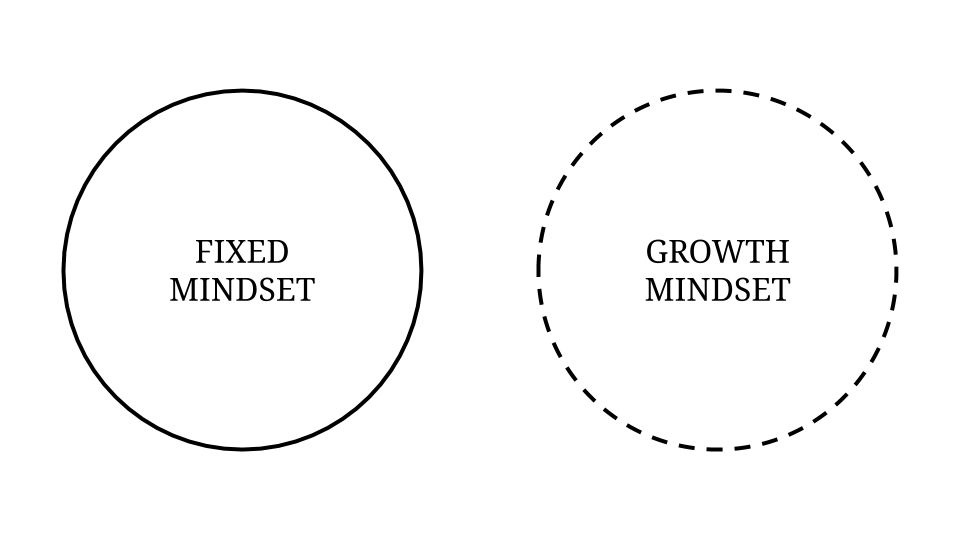
You set the limits of your mind, then leave the limits of your life to your mind. (???)
Dr. Dweck’s research into growth mindset changed education forever
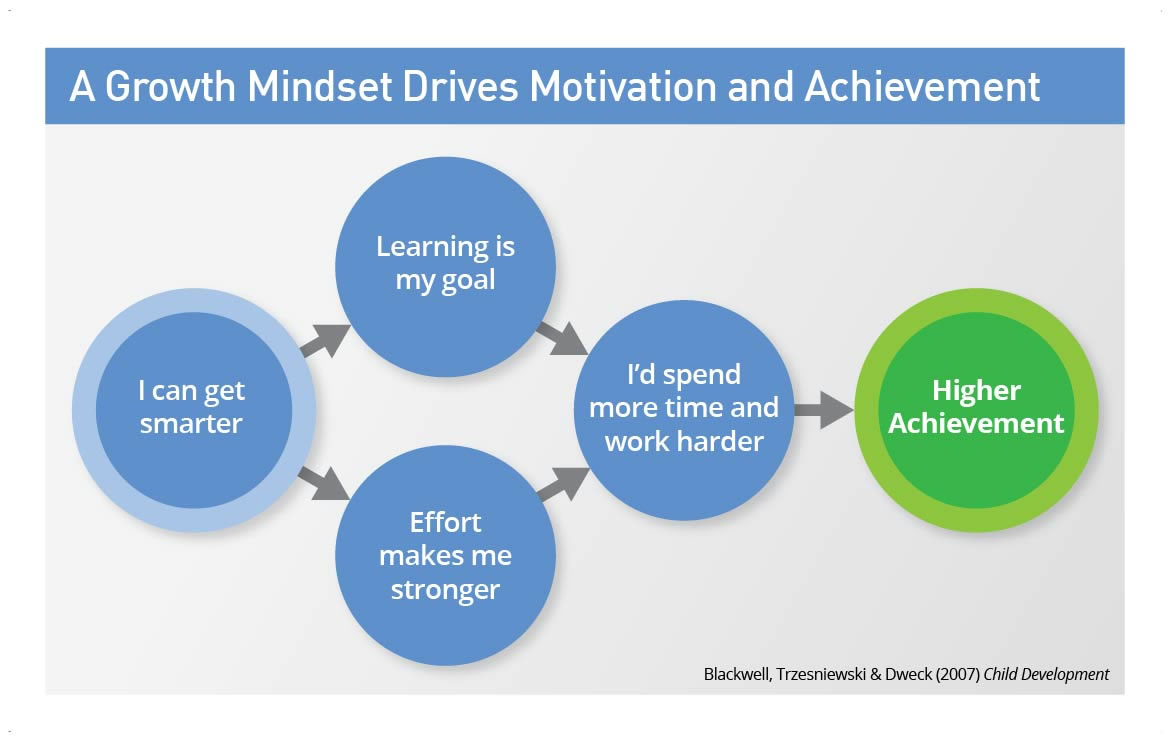
Over 30 years ago, Carol Dweck and her colleagues became interested in students’ attitudes about failure. They noticed that some students rebounded while other students seemed devastated by even the smallest setbacks. After studying the behavior of thousands of children, Dr. Dweck coined the terms fixed mindset and growth mindset to describe the underlying beliefs people have about learning and intelligence. When students believe they can get smarter, they understand that effort makes them stronger. Therefore they put in extra time and effort, and that leads to higher achievement.
Recent advances in neuroscience have shown us that the brain is far more malleable than we ever knew. Research on brain plasticity has shown how connectivity between neurons can change with experience. With practice, neural networks grow new connections, strengthen existing ones, and build insulation that speeds transmission of impulses. These neuroscientific discoveries have shown us that we can increase our neural growth by the actions we take, such as using good strategies, asking questions, practicing, and following good nutrition and sleep habits.
At the same time that these neuroscientific discoveries were gaining traction, researchers began to understand the link between mindsets and achievement. It turns out, if you believe your brain can grow, you behave differently. So the researchers asked, “Can we change mindsets? And if so, how?” This began a series of interventions and studies that prove we can indeed change a person’s mindset from fixed to growth, and when we do, it leads to increased motivation and achievement. For example, 7th graders who were taught that intelligence is malleable and shown how the brain grows with effort showed a clear increase in math grades.

In addition to teaching kids about malleable intelligence, researchers started noticing that teacher practice has a big impact on student mindset, and the feedback that teachers give their students can either encourage a child to choose a challenge and increase achievement or look for an easy way out. For example, studies on different kinds of praise have shown that telling children they are smart encourages a fixed mindset, whereas praising hard work and effort cultivates a growth mindset. When students have a growth mindset, they take on challenges and learn from them, therefore increasing their abilities and achievement.

Decades of Scientific Research that Started a Growth Mindset Revolution. (n.d.). Retrieved June 13, 2020, from https://www.mindsetworks.com/science/
What can you do to promote a growth
mindset in students?
Since the growth mindset is linked to the belief that you can grow your intelligence, you can guide students toward embracing growth when you use specific types of praise.
The Impact of Praise and Feedback
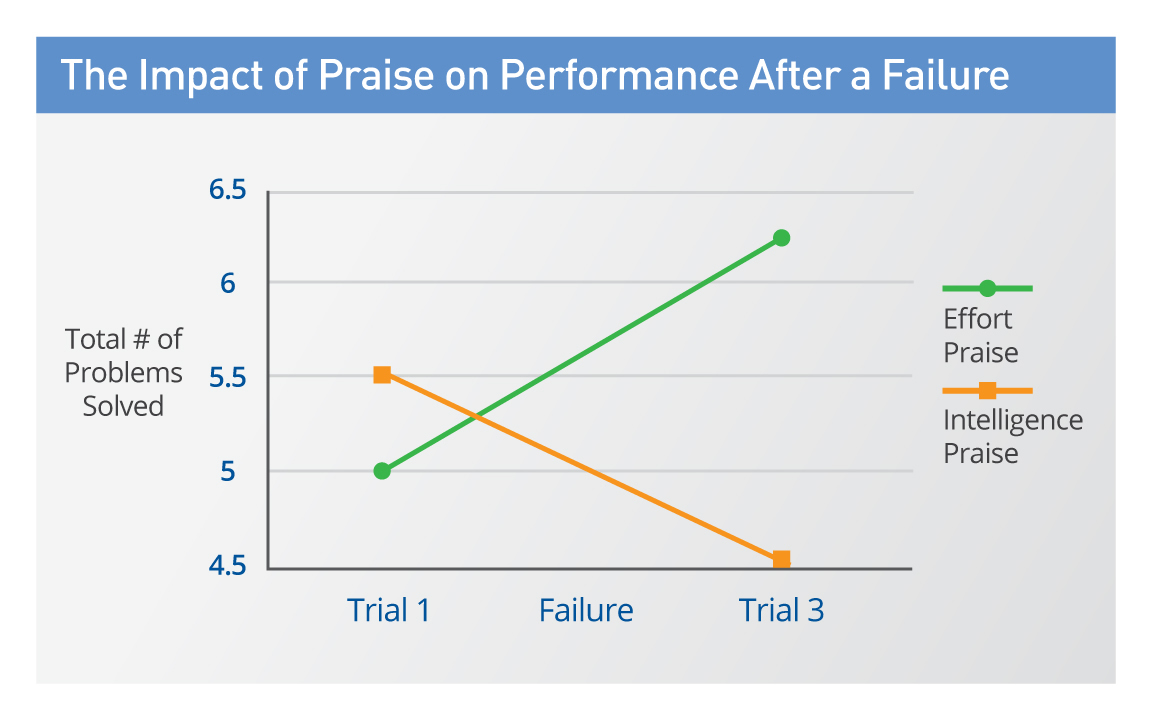
The feedback teachers give students can influence their mindsets in surprising ways. For example, while praise for intelligence, such as “You’re so smart!” is considered by some to be motivating, research demonstrates that it can actually have a negative impact on student motivation and achievement. In a study with 5th graders, Dweck and Mueller divided the children into two groups and asked them to work on a puzzle task. One group, after succeeding initially, was praised for their intelligence and ability.
The other group, also after succeeding, was praised for their effort, rather than innate intelligence. When the initially easy task became harder, the groups reacted in very different ways. Students praised for intelligence preferred to continue working on the easier tasks, while students praised for effort chose to progress to more challenging tasks. The effort-praised group exhibited more challenge-seeking behavior and cited learning goals as most motivating. The intelligence-praised group avoided challenge in favor of ensured success, and cited performance – i.e., looking smart – as a primary goal. Overall, praise for intelligence actually led to less persistence, less enjoyment, and worse performance than praise for effort. When students were praised for having high ability, they came to attribute their success to a fixed (and unchangeable) quality of themselves, while students praised for effort believed that their performance was subject to improvement
The Impact of Teacher Mindsets
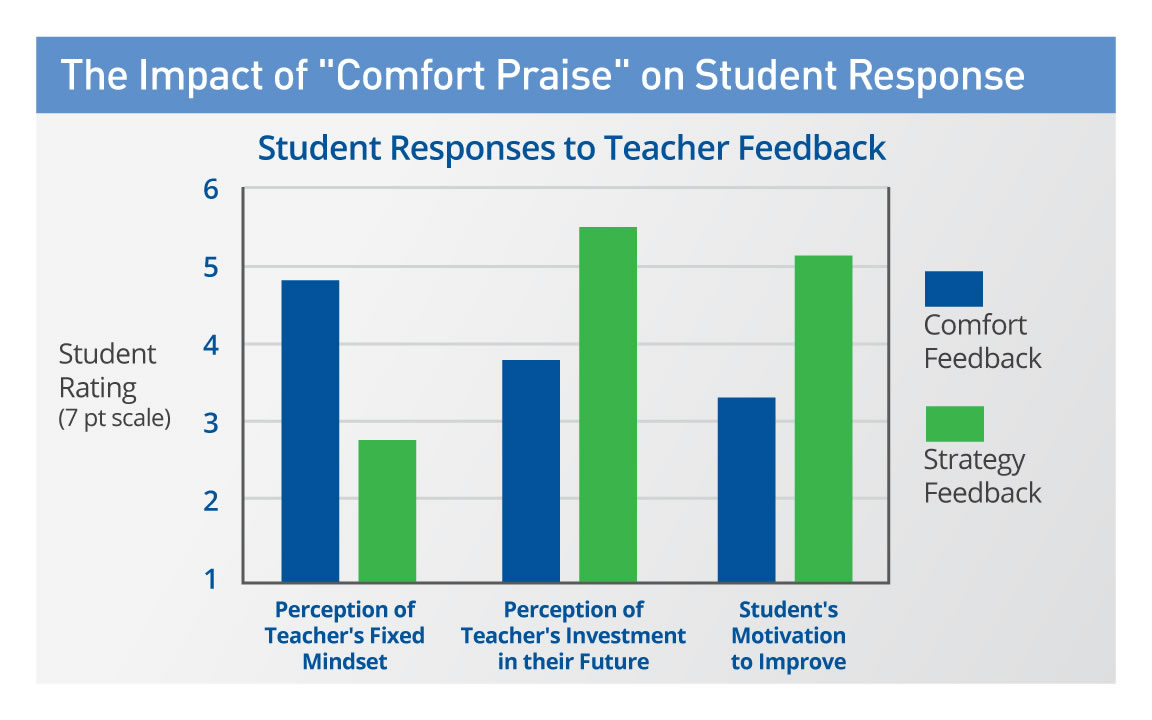
Research also supports the idea that educator mindsets may influence the way they respond to students, which in turn has an impact on the students’ outcomes. In a 2012 study, Rattan et al found that educators with a fixed mindset about math ability were more likely to judge students as having low potential than their growth-minded counterparts. Additionally, educators with a fixed mindset were more likely to comfort students about their perceived low math abilities and apply kind strategies. They used “comfort-oriented” feedback, in which they told their students that their inability to succeed at math is okay, and also attempted to make math easier by lowering expectations. In a separate study reported in the same paper, this comfort-oriented feedback was linked to lower motivation in students, as well as lower expectations for their own performance when compared with “strategy-oriented” feedback.
MindsetMaker™ Professional Development Course Changes Teacher Mindsets
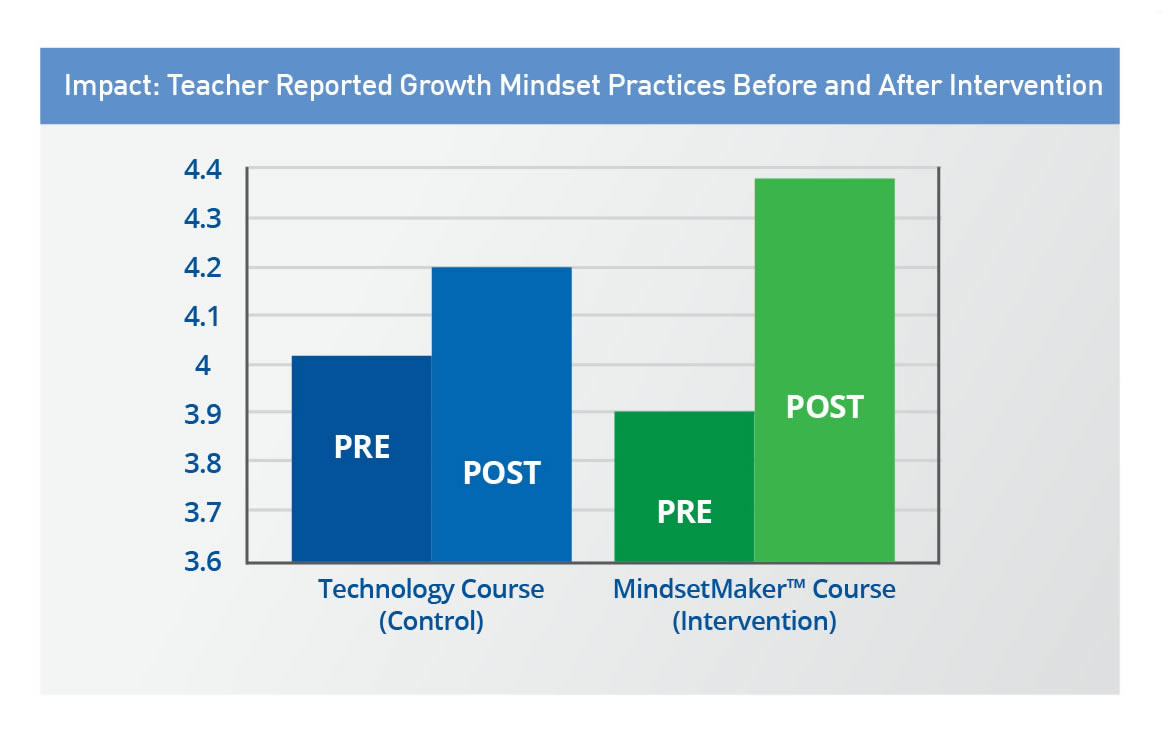
A recent study at Washington State University investigated the impact of growth mindset professional development on pre-service college students. The results showed that instructors who used the MindsetMaker™ professional development course adopted more growth mindset practices and beliefs than those who did not receive the training.
How Praise and Feedback Impact Student Outcomes. (n.d.). Retrieved June 13, 2020, from https://www.mindsetworks.com/Science/Teacher-Practices
 Makaleskop